Hair Types Explained: Texture, Density, Porosity and Curl Patterns
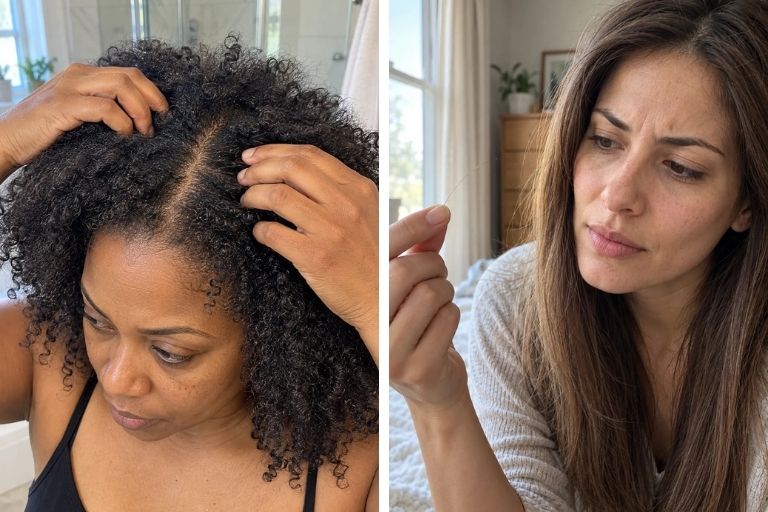
Two people can have naturally curly hair and still need completely different styling routines. One might have fine strands that become weighed down by heavy creams. The other might have coarse, tightly coiled hair that needs more conditioning to stay manageable.
Their curl patterns may look similar, but their hair behaves differently.
That’s because your hair type involves more than whether your strands are straight, wavy, curly, or coily.
Strand thickness, hair density, porosity, scalp condition, and the way your hair responds to moisture all influence how it looks and feels.
Understanding these characteristics can save you from choosing unsuitable hairstyles or buying products based on someone else’s routine.
You don’t need to become a hair expert or memorize every classification. You just need to recognize which features matter and how they affect the decisions you make.
What Determines Your Hair Type?
Hair type is a broad term covering several different characteristics.
Some describe the physical structure of individual strands. Others describe how much hair you have or how the strands respond to water and styling.
The four characteristics discussed most often are:
- Hair texture or strand thickness: How fine or coarse individual strands are.
- Hair density: How closely your hair strands are distributed across your scalp.
- Hair porosity: How readily hair absorbs water and how it releases moisture.
- Curl pattern: Whether your hair grows straight, forms waves, curls, or tight coils.
These characteristics are related, but they aren’t interchangeable.
For example, someone can have fine, high-density hair with natural curls.
Another person might have coarse, low-density hair that grows almost completely straight.
Neither combination is unusual.
Understanding Hair Characteristics at a Glance
| Characteristic | What It Describes | Why It Matters |
|---|---|---|
| Strand thickness | Diameter of individual hairs | Influences how strands feel and respond to product weight |
| Density | Number of hairs within a scalp area | Influences overall fullness and haircut shape |
| Porosity | Hair’s interaction with water and moisture | Influences conditioning and drying behavior |
| Curl pattern | Natural shape of strands | Influences styling techniques, shrinkage, and detangling |
| Scalp condition | Oiliness, dryness, and possible irritation | Influences cleansing needs |
You don’t need exact measurements to make useful observations.
However, home observations have limitations. A hairstylist can help assess hair characteristics, while a dermatologist can evaluate concerns involving hair loss or scalp health.
Hair Texture: Fine, Medium or Coarse?
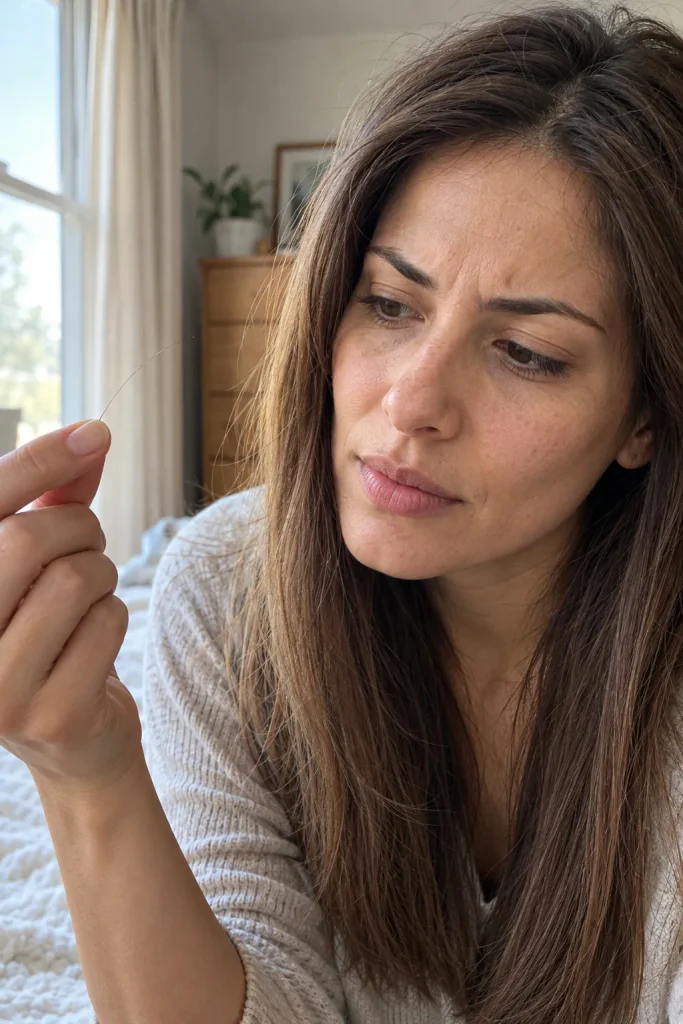
Hair texture is sometimes used to describe curl pattern. In this section, it refers specifically to the thickness of individual strands.
This distinction is important.
Fine hair isn’t necessarily thin hair, and coarse hair isn’t necessarily thick hair overall.
A strand’s diameter is separate from how many strands you have.
Fine Hair
Fine hair consists of strands with a relatively small diameter.
A single strand may feel delicate or barely noticeable between your fingers.
Fine hair can create a smooth, soft appearance, particularly when it’s naturally straight.
However, some fine-haired people find that heavy styling products reduce movement or leave their roots looking flat.
Fine hair doesn’t automatically mean weak or damaged hair.
Strand size is a natural characteristic, while damage describes changes to the condition of the hair.
Hairstyles to Consider for Fine Hair
A blunt bob can create a defined cutting line that makes the ends appear more substantial.
A pixie with controlled texture may allow easy styling around the crown.
Longer hairstyles can also work, especially when the haircut preserves sufficient fullness through the ends.
Avoid assuming that fine hair must always be cut short.
Your density and natural curl pattern matter too.
Medium Hair
Medium strands fall between fine and coarse hair in diameter.
People with medium hair may find that their strands offer a useful balance between flexibility and structure.
But medium texture doesn’t guarantee that every hairstyle will hold easily.
Curl pattern, density, damage, and styling products can still make a significant difference.
Hairstyles to Consider for Medium Hair
Medium-textured hair may work with a wide range of cuts, including:
- Layered shoulder-length hairstyles
- Blunt or softly textured bobs
- Long hair with face-framing layers
- Pixie cuts with movement
- Updos and braided styles
Choose based on how your hair behaves rather than relying on strand thickness alone.
Coarse Hair
Coarse hair has a relatively large individual strand diameter.
It may feel more substantial when you roll a single strand between your fingertips.
Coarse strands can contribute to a strong-looking hairstyle, but their behavior depends on curl pattern, conditioning, and overall hair condition.
Coarse hair isn’t automatically dry, frizzy, or difficult to manage.
Those characteristics vary from person to person.
Hairstyles to Consider for Coarse Hair
Cuts with thoughtful weight distribution may help you create the silhouette you want.
For example, a dense, coarse bob may benefit from a different layering approach than a fine-haired bob.
Long layers can create movement, while shorter cuts may require attention to how the strands naturally sit.
If your hair is coarse and curly, consider how the curl pattern affects the finished shape before choosing a length.
Hair Density: Why Fine Hair Can Still Look Thick
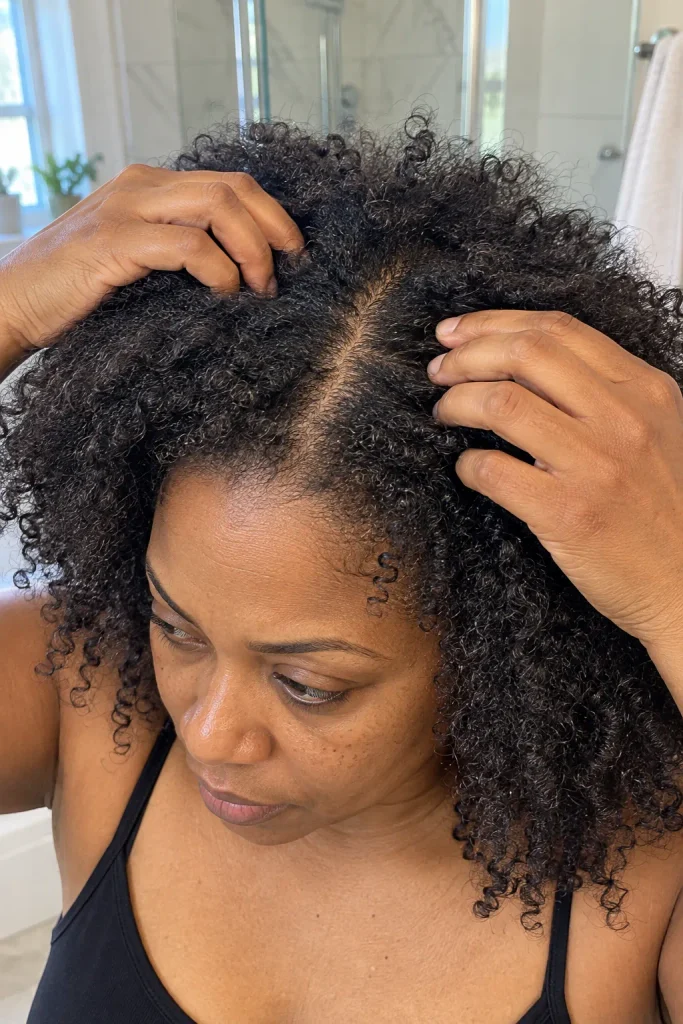
Hair density describes how many strands grow within a given area of your scalp.
It isn’t the same as individual strand thickness.
You could have thousands of fine strands growing close together, creating a full-looking hairstyle.
Someone else might have relatively coarse strands but fewer of them, resulting in a less dense appearance.
This is why two people with similar curl patterns and strand thickness can look very different in the same haircut.
Low-Density Hair
Low-density hair has fewer strands within a given scalp area compared with higher-density hair.
The scalp may be more visible, especially when the hair is parted.
However, visible scalp doesn’t necessarily indicate a medical problem.
Hair color, lighting, part placement, and natural density all influence appearance.
Some people naturally have lower-density hair.
Others experience changes over time.
Choosing Hairstyles for Lower-Density Hair
A haircut with a defined perimeter may help preserve the appearance of fullness.
Blunt bobs and lobs can be worth considering.
Excessive layering may leave the ends looking sparse if too much hair is removed.
That doesn’t mean layers should always be avoided.
A skilled hairstylist can adapt the cut to your density and natural texture.
Medium-Density Hair
Medium-density hair falls between lower and higher density.
It may offer flexibility with both structured and layered hairstyles.
However, the best cutting approach still depends on strand thickness and curl pattern.
Medium density isn’t a guarantee that every haircut will create the same amount of volume.
High-Density Hair
High-density hair has many strands growing within a given scalp area.
This can contribute to a full-looking hairstyle, particularly when the hair is curly or wavy.
High-density hair may need additional sectioning during washing, conditioning, and styling.
Some haircuts may also require careful weight distribution to prevent an unwanted bulky shape.
Choosing Hairstyles for High-Density Hair
Layered cuts can help distribute volume.
Long hairstyles may provide room for movement, while bobs can create strong silhouettes.
For naturally curly or coily hair, consider how density and shrinkage work together.
Avoid automatically asking your stylist to remove a large amount of bulk. Excessive thinning or unsuitable layering can affect the finished shape and condition of the hair.
Can You Determine Density at Home?
You can make general observations, but you can’t reliably count hair density by looking in a mirror.
Start by examining your scalp in consistent lighting.
Part your hair naturally and notice how much scalp you can see.
Then compare the appearance with older photographs taken in similar conditions.
A ponytail may also offer a rough indication of overall fullness, but ponytail size is influenced by strand thickness, length, layers, and curl pattern.
Don’t rely on a single observation to determine whether your density is low or high.
When Density Changes
A gradual widening of your part, a noticeable reduction in ponytail fullness, or sudden shedding may indicate hair loss rather than naturally low density.
If you notice these changes, consult a dermatologist.
A haircut can alter the appearance of fullness, but it cannot diagnose or treat the underlying reason for hair loss.
Hair Porosity: What It Means and Why It Matters
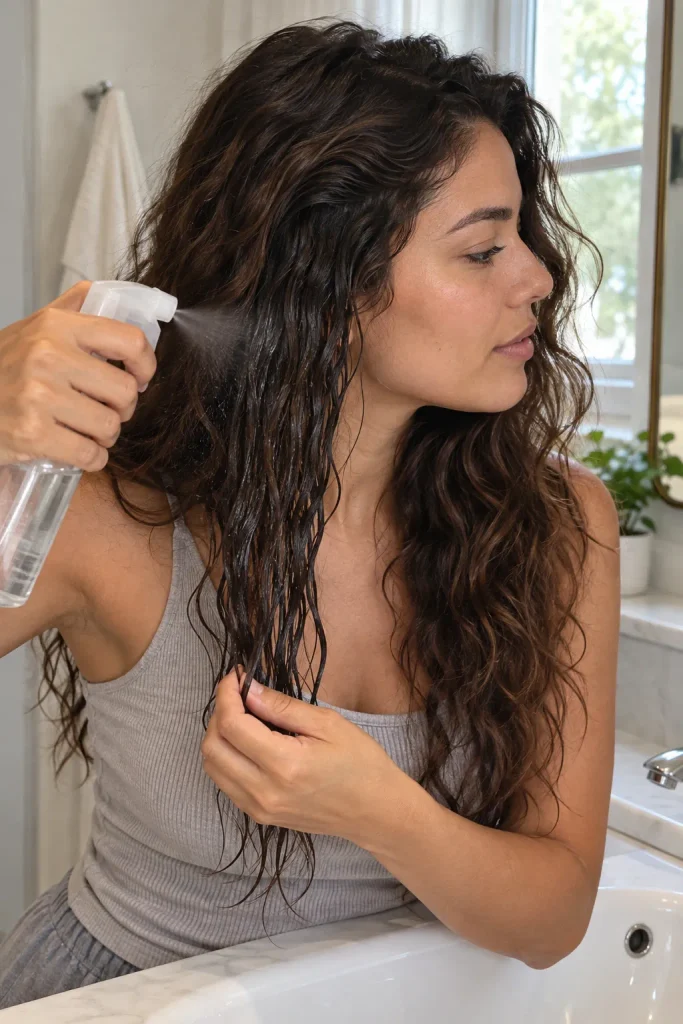
Hair porosity describes how hair interacts with water and moisture.
It’s influenced by the structure and condition of the hair fiber, particularly its outer protective layer, called the cuticle.
The cuticle consists of overlapping cells that help protect the inner hair.
Chemical treatments, environmental exposure, and physical damage can affect how this protective surface behaves.
Porosity is often discussed in three broad categories: low, medium, and high.
These categories can be useful for understanding product behavior, but they aren’t fixed diagnoses.
Hair may also have different conditions along its length.
For example, the ends of frequently lightened hair may behave differently from the newer growth near the roots.
Low-Porosity Hair
Low-porosity hair is generally described as having a cuticle structure that is relatively resistant to water penetration.
Some people notice that their hair takes longer to become thoroughly wet or that certain products remain noticeable on the surface.
However, these observations aren’t enough to establish porosity accurately.
Hair density, product buildup, strand diameter, and styling history can affect the same behaviors.
Styling Considerations
If your hair feels weighed down by rich products, start with a smaller amount.
Apply conditioner evenly and rinse according to the product directions.
Use a routine appropriate for your texture rather than assuming that low porosity requires an entirely different collection of products.
Medium-Porosity Hair
Medium porosity is commonly used to describe hair that absorbs and releases moisture at an intermediate rate.
This doesn’t mean the hair is automatically healthy or maintenance-free.
Color treatments, heat styling, friction, and environmental conditions can still influence its behavior.
A balanced routine with appropriate cleansing and conditioning may be sufficient.
High-Porosity Hair
High-porosity hair is often associated with greater water uptake and a more compromised protective surface.
Some hair naturally behaves this way, while chemical processing or physical damage can increase porosity.
Frequently bleached, heat-damaged, or weathered ends may become more porous.
Depending on the hair’s condition, you might notice roughness, tangling, or difficulty maintaining a smooth finish.
However, frizz and dryness alone don’t prove high porosity.
Styling Considerations
Focus on reducing unnecessary damage.
Use conditioner after shampooing.
Consider a leave-in conditioner appropriate for your texture and hair condition.
Limit excessive heat and handle tangled hair gently.
If your hair has been chemically treated, follow professional aftercare guidance.
Avoid assuming that oils or particular homemade treatments can permanently repair every form of hair damage.
Is the Hair Float Test Accurate?
You may have seen advice suggesting that you should drop a strand of hair into water.
The claim is that floating hair indicates low porosity, while sinking hair indicates high porosity.
The problem is that floating and sinking can be influenced by several factors, including trapped air, product residue, surface tension, and how the strand contacts the water.
The test doesn’t reliably isolate porosity.
For that reason, I wouldn’t recommend using it to determine your hair type or justify purchasing products.
A more useful approach is to observe how your hair responds to conditioning, cleansing, and styling over time.
For precise assessment of hair fiber properties, specialized testing is required.
Understanding Curl Patterns: Straight, Wavy, Curly and Coily
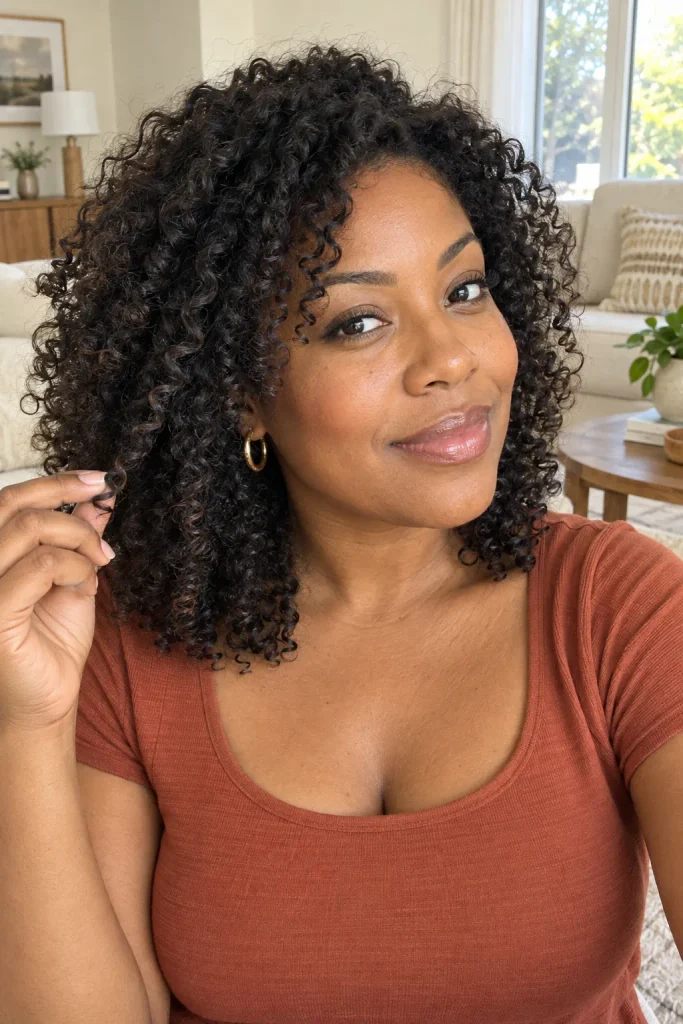
Curl pattern describes the natural shape that individual hair strands form.
Some strands grow relatively straight. Others form gentle waves, defined spirals, or tight coils.
The well-known curl typing system groups hair into four broad categories, often labeled Types 1 through 4.
Each category is commonly divided into A, B, and C subgroups.
This system is a popular styling shorthand, not a medical classification.
You may also have more than one curl pattern on the same head.
Type 1: Straight Hair
Type 1 hair has little or no naturally visible wave or curl.
It may be fine, medium, or coarse.
Straight hair can appear sleek and reflect light evenly, but the overall result depends on its condition and styling.
The commonly used subcategories include:
- 1A: Very straight hair with little visible bend.
- 1B: Straight hair with some body or movement.
- 1C: Straight hair that may have more noticeable bends or texture.
These descriptions are approximate.
Hairstyle Considerations
Straight hair can display blunt cutting lines clearly.
Bobs, lobs, long layers, and pixies may work well depending on density and preferred styling.
If your hair is fine, discuss how to preserve fullness through the ends.
Type 2: Wavy Hair
Type 2 hair forms visible bends, often resembling the letter S.
Some waves are loose and subtle. Others are more defined.
Common subcategories include:
- 2A: Loose, gentle waves.
- 2B: More noticeable S-shaped waves.
- 2C: Strong waves that may approach loose curls.
Wavy hair can look straighter when brushed, stretched, or weighed down by products.
Humidity and drying methods may also influence its appearance.
Hairstyle Considerations
Shoulder-length layers, textured bobs, and longer cuts can work with natural wave patterns.
Avoid assuming that every wavy haircut needs extensive layering.
The best approach depends on strand thickness, density, and where the waves form.
Type 3: Curly Hair
Type 3 hair forms visible curls or spirals.
Curl size and springiness vary widely.
Common subcategories include:
- 3A: Larger, looser curls.
- 3B: More compact spiral curls.
- 3C: Tighter, closely formed curls.
Curly hair can experience noticeable shrinkage as it dries.
A haircut that looks shoulder-length when wet may sit higher after the curls form.
Hairstyle Considerations
Choose a haircut based on the finished dry shape.
Curly bobs, rounded layers, longer curly cuts, and curly fringes can all be adapted to different curl patterns.
A stylist familiar with your texture can help position layers without creating an unwanted silhouette.
The American Academy of Dermatology recommends gentle detangling and conditioning appropriate to curly hair’s needs.
Type 4: Coily Hair
Type 4 hair forms tight coils, small curls, or very compact patterns.
Its shape may be less visibly defined when viewed without separating or stretching the strands.
The commonly used subcategories include:
- 4A: Small, defined coils.
- 4B: Tighter patterns that may form sharper bends.
- 4C: Very compact patterns with less immediately visible curl definition.
These categories overlap, and many people have a mixture of patterns.
Coily hair may experience substantial shrinkage, making its dry length appear much shorter than its stretched length.
Hairstyle Considerations
Rounded natural styles, tapered cuts, twists, braids, and updos offer many possibilities.
Protective styling decisions should consider the amount of tension placed on the scalp and hairline.
A hairstyle doesn’t become protective simply because it’s braided.
Comfort, maintenance, and avoiding prolonged pulling matter.
Why You Might Have More Than One Hair Type
It’s common for hair to behave differently across the head.
You might have straighter sections near the crown and stronger waves underneath.
Some curls may form tighter spirals near the nape while the front pieces fall more loosely.
Several factors can contribute to these differences, including natural variation, growth patterns, weathering, and previous styling or chemical treatments.
You don’t need to force your entire head into one curl category.
Instead, observe which sections behave similarly.
This can help you make practical styling adjustments.
For example, you might use a different amount of product on the drier ends than on the roots.
You may also need to style the front pieces separately if they form a looser pattern than the rest of your hair.
Can Your Hair Type Change Over Time?
Some characteristics can change.
Hair may respond differently following chemical processing, repeated heat exposure, or damage.
Hormonal changes, aging, and medical conditions can also affect hair characteristics, including texture or density.
However, not every change has the same explanation.
If you experience sudden or significant changes in shedding, density, or scalp condition, seek professional medical advice rather than assuming the change is part of normal aging.
How to Identify Your Hair Characteristics at Home

You don’t need to complete complicated online quizzes to understand your hair better.
A simple observation routine can provide useful information.
Start With Clean Hair
Wash your hair using products that suit your scalp and texture.
Condition as needed.
Avoid deliberately stripping the hair of moisture simply to see its natural appearance.
Observe Your Natural Pattern
Allow your hair to dry with minimal manipulation when practical.
If your hair needs styling or conditioning products to prevent excessive tangling, use them.
The goal is to observe how your hair naturally behaves, not force it into an untreated state that causes discomfort.
Notice whether the strands form straight sections, waves, curls, or tight coils.
Examine Individual Strands
Look at a naturally shed strand.
Notice whether it feels delicate, moderately substantial, or relatively coarse.
This gives a rough impression of strand thickness.
It isn’t a laboratory measurement.
Observe Overall Fullness
Check how much scalp is visible under consistent lighting.
Consider whether your hair appears naturally full or relatively sparse.
Remember that strand thickness, curl pattern, and styling all influence visible fullness.
Pay Attention to Product Response
Notice what happens when you apply conditioner or styling products.
Does a small amount leave your hair manageable?
Does a rich product make your roots feel heavy?
Do your ends remain dry despite appropriate conditioning?
These observations can help you choose a routine.
They don’t establish porosity precisely, but they provide practical information about how your hair responds to different products.
How to Use Your Hair Type to Choose Hairstyles
Once you understand your characteristics, selecting a haircut becomes easier.
You can focus on how a hairstyle will behave rather than choosing solely from photographs.
If You Have Fine, Low-Density Hair
Consider how much fullness the haircut preserves around the ends.
Blunt bobs, lobs, and carefully shaped shorter cuts may create a defined silhouette.
Excessive layering can sometimes make the ends look sparse.
If You Have Fine, High-Density Hair
You may have enough overall fullness for a wider range of layered styles.
However, fine strands can still become weighed down by certain products.
Consider both your haircut shape and styling routine.
If You Have Thick, Wavy Hair
Layering can change how volume is distributed.
A stylist may recommend a particular length or internal shape based on where your waves naturally form.
Don’t assume that removing as much weight as possible will create the best result.
If You Have Curly, Low-Density Hair
A shape that preserves the appearance of fullness may be appealing.
Curl pattern, shrinkage, and layering should guide the finished silhouette.
If You Have Coily, High-Density Hair
Consider styles that make sectioning, detangling, and maintenance manageable.
Your natural shape, preferred length, and tolerance for styling tension are important factors.
The most useful haircut is one that works with your hair’s characteristics and your everyday routine.
Choosing Products Based on Your Hair’s Needs
Product recommendations become more useful when you focus on actual problems.
A label that says “for curly hair” or “for fine hair” is a starting point, not a guarantee.
| Your Hair Concern | Product or Routine to Consider |
|---|---|
| Fine hair feels weighed down | Smaller amounts of lightweight conditioner or styling products |
| Hair tangles easily | Appropriate rinse-out or leave-in conditioner |
| Curly hair feels dry | Conditioning products suited to curls |
| Scalp becomes oily quickly | Cleansing according to scalp needs |
| Heat-styled hair becomes rough | Reducing heat exposure and using suitable protection |
| Coily hair tangles during washing | Detangling in sections while damp and conditioned |
| Hair feels coated with products | Reviewing product amount and cleansing frequency |
Introduce one change at a time when possible.
This makes it easier to understand what actually helps your hair.
Don’t assume expensive products are automatically better.
A suitable product used correctly may be more valuable than a complicated routine involving numerous formulas.
Hair Type Myths Worth Questioning
“Fine Hair Means You’re Losing Hair”
Fine hair describes individual strand diameter.
Hair loss involves a change in the amount of hair or its growth.
Someone can naturally have fine hair with high density.
“Coarse Hair Is Always Stronger”
Larger strand diameter doesn’t mean hair is immune to damage.
Coarse hair can still experience breakage from heat, chemical processing, friction, and tension.
“Your Curl Type Tells You Everything About Your Hair”
Curl pattern doesn’t reveal your density, strand thickness, porosity, or scalp condition.
Two people with the same curl classification may need very different routines.
“High-Porosity Hair Always Needs Heavy Oils”
Product needs depend on several characteristics.
High porosity doesn’t automatically determine which oil, conditioner, or cream will work best.
“You Must Find Your Exact Curl Number Before Choosing Products”
Curl numbers can help describe a pattern, but they aren’t essential.
Understanding how your hair behaves and responds to products is often more practical.
“Hair Porosity Can Be Diagnosed With a Glass of Water”
The common float test is affected by multiple variables and doesn’t provide a reliable standalone measurement of porosity.
Use it neither as a diagnosis nor as the sole basis for buying products.
When to Ask a Professional for Help
Most differences in hair type are natural variations.
You don’t need professional treatment simply because your hair is fine, coarse, curly, or difficult to style.
However, a dermatologist can help if you experience:
- Sudden or unusually heavy shedding
- A widening part or noticeable reduction in density
- New bald patches
- Persistent scalp irritation or inflammation
- Significant breakage that doesn’t improve with gentler care
A hairstylist can help with cutting techniques, styling, and choosing practical hairstyles.
A dermatologist is the appropriate professional for evaluating possible medical causes of hair or scalp changes.
Knowing the difference helps you seek the right kind of advice.
Frequently Asked Questions
What Are the Four Main Hair Types?
The commonly used curl classification groups hair into straight, wavy, curly, and coily categories, often called Types 1 through 4. Each category is typically divided into smaller subgroups.
How Do I Find My Exact Hair Type?
Observe your natural curl pattern, individual strand thickness, overall density, and how your hair responds to products. You may have characteristics that don’t fit neatly into one category.
Can I Have Fine Hair and High Density?
Yes. Fine hair describes strand diameter, while density describes how many strands grow within an area of the scalp.
Can Hair Have Different Porosity at the Roots and Ends?
Yes. Hair can differ in condition along its length, particularly when the ends have experienced more chemical processing, heat, friction, or environmental exposure.
Is Curly Hair Always Thicker Than Straight Hair?
No. Curly hair can have fine, medium, or coarse strands. Curl pattern and individual strand thickness are different characteristics.
Does Hair Type Determine Which Hairstyles I Can Wear?
No. Hair type influences how a hairstyle behaves and what techniques may be useful, but it doesn’t create strict limits. Many haircuts can be adapted to different textures and densities.
Is Hair Porosity More Important Than Curl Pattern?
Neither characteristic tells the whole story. Curl pattern affects styling and shape, while porosity can influence hair’s interaction with moisture. Density, strand thickness, and hair condition matter as well.
Understanding Your Hair Makes Styling Easier
You don’t need to memorize curl classifications or perfectly identify every characteristic to make better hairstyle decisions.
Start with what you can observe.
Look at the thickness of your strands, the fullness of your hair, the way it naturally curls or waves, and how it responds to conditioning and styling.
Then use that information to choose a haircut and routine that fit your needs.
Fine hair doesn’t automatically require a short haircut. Coily hair doesn’t have to be styled a particular way. Straight hair isn’t necessarily low maintenance, and a curl classification won’t tell you which products to buy.
Your hair has several characteristics working together.
Once you understand them, you’re better equipped to choose hairstyles that look good, feel comfortable, and fit your everyday life.
Editorial note: Curl-type classifications and porosity categories are descriptive tools rather than medical diagnoses. Home observations cannot reliably measure individual hair-fiber characteristics. Seek professional advice for persistent scalp concerns or significant changes in hair density.